Очнулась. Взглянула. Обомлела — проспала! Вскочила, стала будить. Буркнул, отвернулся.
Растолкала, подняла. Кинулась разогревать, накрывать, накручиваться...
Позвала. Молчит. Заглянула — накрылся, храпит. Пощекотала. Лягнул.
Рявкнула! Замычал, поднялся, поплёлся... Опоздаю!! Выскочила, помчалась.
Отходит! Догнала, уцепилась, повисла. Доехала. Спрыгнула. Звенит!
Побежала, ворвалась, отпихнула, проскочила. Отлегло!
Поднялась. Уселась. Вскочила, позвонила, напомнила погасить, выключить, причесать, застегнуть, обуть... Бросил. Разложилась, начала работать.
Шепчутся... Прислушалась — завезли, расфасовывают, будут давать! Отпросилась, вернулась, продолжила трудиться.
Спохватилась, выбежала. Влетела: занимала — отошла! Не пускают. Пристыдила, объяснила, добилась — обхамили. Стоять — не пообедаешь.
Встала. Движется! Приободрилась. Подошла. Кричат: не выбивать! Кончилось!! Рыдать хочется. Возмутилась. Обозвали. Поплелась. Поднажала. Помчалась.
Прибежала. Плюхнулась, отдышалась. Позвонила. Говорит, задержится. Зашиваются, авралят — врёт!
Выскочила.
Забежала, обула, одела, потащила. Ласкается, обнимает, подлизывается...
Выясняется: полез, опрокинул, разбил! Шлёпнула. Орёт, обзывается. Говорить не умеет — выражаться научился! Придётся отучать.
Пришли. Раздела, умыла, вскипятила, отшлёпала, остудила, накормила, прополоскала, отняла, выключила, наказала, почистила, рассказала, протёрла, переодела, подмела, спела, уложила... Присела.
Забеспокоилась. Позвонила. Узнала — ушёл, не задерживался! Обнаглел!! Распоясался! Разведусь! Сдёрнула, швырнула, легла.
Вскочила. Начала обзванивать. Не был... не заходил... не появлялся... не приводили... не привозили. Сломал? Попал?! Спутался?! Разбился?!
Явился...
Ухмыляется! Размахнулась... Не успела — упал. Подтащила, стянула, взвалила.
Ушла, уткнулась, разрыдалась.
Заплакал... Подбежала, пощупала, подняла, переодела, укутала,подоткнула, застирала, повесила.
Легла. Вскочила, накрутилась. Постояла. Поглядела. Вздохнула. Укрыла. Завела.
Выключила.
Отключилась.
Валерий Чудодеев — «Глаголы женского рода»
<16 апреля 1980>
from Love Russian Language
Showing posts with label Russian language. Show all posts
Showing posts with label Russian language. Show all posts
Monday, 24 June 2013

Saturday, 15 June 2013
Learning Russian through learning Business strategy: 9 phrases you should never say to clients when speaking on the phone
9 phrases you should never say to clients when speaking on the phone
9 фраз, которые нельзя говорить клиентам по телефону
1. "Я не знаю" \\ 'I don't know'
Альтернативный вариант: "Позвольте, я уточню этот вопрос" ("Вы можете немного подождать, пока я уточню информацию").
2. "Не могу Вам ничего обещать" \\ 'I can't promise you'
Альтернативный вариант: "Я сделаю все возможное, чтобы решить Ваш вопрос".
3. "Я Вас не понял" \\ 'I didn't get it'
Альтернативный вариант: "Уточните, пожалуйста" ("Позвольте уточнить, правильно ли я Вас понимаю").
4. "Вы меня не так поняли" \\ 'You didn't get what I mean'
Альтернативный вариант: "Разрешите мне пояснить еще раз" ("Я хотел сказать, что…").
5. "Вы должны" \\ 'You must... '
Альтернативный вариант: "Чтобы я максимально оперативно решил Ваш вопрос, Вы можете со своей стороны…" ("Замечательно будет, если Вы…").
6. "Вы не правы" \\ 'You are wrong'
Альтернативный вариант: "Да, я с Вами согласен, есть такое мнение, при этом..."
7. "Одну секундочку" ("Не вешайте трубку, оставайтесь на линии") \\ 'Just a second'
Альтернативный вариант: "Мне нужна всего минутка, чтобы… . Вы можете подождать на линии или мне лучше Вам перезвонить?"
8. "Это последний товар на складе" \\ 'It's the last item in the store'
Альтернативный вариант: "Этот товар активно раскупают, а следующий завоз ожидается нескоро".
9. "Как Вы нас нашли?" \\ 'How did you learn about us?'
Альтернативный вариант: "Разрешите уточнить, откуда Вы о нас узнали?"
 source: Business Strategy
9 фраз, которые нельзя говорить клиентам по телефону
1. "Я не знаю" \\ 'I don't know'
Альтернативный вариант: "Позвольте, я уточню этот вопрос" ("Вы можете немного подождать, пока я уточню информацию").
2. "Не могу Вам ничего обещать" \\ 'I can't promise you'
Альтернативный вариант: "Я сделаю все возможное, чтобы решить Ваш вопрос".
3. "Я Вас не понял" \\ 'I didn't get it'
Альтернативный вариант: "Уточните, пожалуйста" ("Позвольте уточнить, правильно ли я Вас понимаю").
4. "Вы меня не так поняли" \\ 'You didn't get what I mean'
Альтернативный вариант: "Разрешите мне пояснить еще раз" ("Я хотел сказать, что…").
5. "Вы должны" \\ 'You must... '
Альтернативный вариант: "Чтобы я максимально оперативно решил Ваш вопрос, Вы можете со своей стороны…" ("Замечательно будет, если Вы…").
6. "Вы не правы" \\ 'You are wrong'
Альтернативный вариант: "Да, я с Вами согласен, есть такое мнение, при этом..."
7. "Одну секундочку" ("Не вешайте трубку, оставайтесь на линии") \\ 'Just a second'
Альтернативный вариант: "Мне нужна всего минутка, чтобы… . Вы можете подождать на линии или мне лучше Вам перезвонить?"
8. "Это последний товар на складе" \\ 'It's the last item in the store'
Альтернативный вариант: "Этот товар активно раскупают, а следующий завоз ожидается нескоро".
9. "Как Вы нас нашли?" \\ 'How did you learn about us?'
Альтернативный вариант: "Разрешите уточнить, откуда Вы о нас узнали?"

Tuesday, 26 March 2013
Language tips: Expressing AGREEMENT
Some useful phrases to express your AGREEMENT - СОГЛАСИЕ (for upper-intermediate and advanced levels)

Thursday, 19 July 2012
Russian names. Female names. Part 1
Usually Russian names are known from the most famous novels. It's great that the names like Natasha Rostova or Jury Zhivago are familiar. But still in RUssia we have much more beautiful names. Let's learn some of them.
 Besides, in Russia we have a nice traditions to use millions of short and tender names instead of the official one. A name may have up to 15 variants, which are often used. Once I was told a story when a guy could not understand a Russian novel just because instead of a 'main' official name , the hero was called in other ways, more 'domestic' and tender. so poor guy thought 'oh, how many people are there in the novel?!' That's why here we will also tell you most common short and spoken variants of Russian names.
from www.500px.com
Female names, part 1
АЛЕКСАНДРА - ALEXANDRA
– АЛЕКСАНДРА
. Helpful, reliable
(Greek). Spoken variants – Sasha -
Саша, Shura -
Шура, Sachenka -
Сашенька
АЛЛА - ALLA. Other (gothic). Bright, "invincible." Spoken variants: Alia Аля
АНАСТАСИЯ ANASTASIA. Resurrection (Greek). Spoken variants: Настя, АсяАННА ANNA. Gracious (Hebr). Spoken variants: Ania, Anuta, Nura, Annushka
АНТОНИНА - ANTONINA Extensive (Latin). Spoken variants: Tonia, Tosia
ВАЛЕНТИНА - VALENTINA. Strong (Latin). Spoken variants: Valia, Valusha
ВАРВАРА - VARVARA
- Barbara. Spoken variants: Varia, Varusha
ВАСИЛИСА - VASSILISSA. Regal (Greek). Idol. Spoken variants: VasiaВЕРА - VERA. Means Faith. Spoken variants: Verochka
ВИКТОРИЯ - VICTORIA. The winner (Latin). Spoken variants: Vika, Vikulia
ГАЛИНА - GALINA Clarity (Greek). Spoken variants: Galia
ДАРЬЯ - DARIA. Great Fire (Persian). Short variant: Dasha
ЕВГЕНИЯ - EUGENIE. Noble (Greek). Zhenya, Zhenechka
ЕКАТЕРИНА - CATHERINE. Hope the real, ever-pure (Greek). Short variants: Katia, Katyusha, Katenka
ЕЛЕНА - ELENA. Solar (Greek). Short variant: Lena, Alyona, Alyonka
ЕЛИЗАВЕТА - ELIZABETH. Revering God (Hebr). Short and spoken variants: Лиза,
Лизонька
ЗИНАИДА - ZINAIDA. Divine (Greek). Short and spo ken variants:Zina, Zinochka
ЗОЯ - ZOYA. Life (Greek). Short and spoken variants: Зоечка,
Зоюша
IRINA. peace (Greek). Short and spoken variants: Ира,
Ириша, ИрочкаКИРА - CYRUS. Mistress (Greek). Short and spoken variants: Кира, Кирочка
КСЕНИЯ - Xenia. Wanderer (Greek). Short and spoken variants: Ксеня, Ксюша
to be continued
Wednesday, 6 June 2012
Eugene Onegin, some famous quotations
Eugene Onegin (Russian: Евге́ний Оне́гин, BGN/PCGN: Yevgeniy Onegin) is a novel in verse written by Alexander Pushkin.
It is a classic of Russian literature written by Pushkin, and its eponymous protagonist has served as the model for a number of Russian literary heroes (so-called superfluous men). It was published in serial form between 1825 and 1832. The first complete edition was published in 1833, and the currently accepted version is based on the 1837 publication.
Almost the entire work is made up of 389 stanzas of iambic tetrameter with the unusual rhyme scheme "AbAbCCddEffEgg", where the uppercase letters represent feminine rhymes while the lowercase letters represent masculine rhymes. This form has come to be known as the "Onegin stanza" or the "Pushkin sonnet."
The rhythm, innovative rhyme scheme, the natural tone and diction, and the economical transparency of presentation all demonstrate the virtuosity which has been instrumental in proclaiming Pushkin as the undisputed master of Russian poetry.
The story is told by a narrator (a lightly fictionalized version of Pushkin's public image), whose tone is educated, worldly, and intimate. The narrator digresses at times, usually to expand on aspects of this social and intellectual world. This allows for a development of the characters and emphasises the drama of the plot despite its relative simplicity.
The book is admired for the artfulness of its verse narrative as well as for its exploration of life, death, love, ennui, convention and passion.
Чем меньше женщину мы любим,
Тем легче нравимся мы ей,
И тем ее вернее губим
Средь обольстительных сетей.
Тем легче нравимся мы ей,
И тем ее вернее губим
Средь обольстительных сетей.
The less we show our love to a woman,
Or please her less, and neglect our duty,
The more we trap and ruin her surely
In the flattering toils of philandery.
Or please her less, and neglect our duty,
The more we trap and ruin her surely
In the flattering toils of philandery.
***
Учитесь властвовать собою;
Не всякий вас, как я, поймет;
К беде неопытность ведет".
Не всякий вас, как я, поймет;
К беде неопытность ведет".
Learn self control, and do not forget,
Not all will understand you as I, or read you,
Inexperience to calamity can often lead you.
Not all will understand you as I, or read you,
Inexperience to calamity can often lead you.
***
Уж небо осенью дышало,
Уж реже солнышко блистало,
Короче становился день,
Лесов таинственная сень
С печальным шумом обнажалась,
Ложился на поля туман,
Гусей крикливых караван
Тянулся к югу: приближалась
Довольно скучная пора;
Стоял ноябрь уж у двора.
Уж реже солнышко блистало,
Короче становился день,
Лесов таинственная сень
С печальным шумом обнажалась,
Ложился на поля туман,
Гусей крикливых караван
Тянулся к югу: приближалась
Довольно скучная пора;
Стоял ноябрь уж у двора.
Though we do not admit it in our hearts.
The sky already breathed autumn's breath,
Already the sun shone infrequently,
The day became shorter noticeably,
The mysteries of the woodland shade
With melancholy leaf-rustle were laid bare,
On the fields the mist lay everywhere.
Of geese a cackling caravan
Stretched far to the south: and then came near
That boring time that we all remember,
Already at the gateway stood - November!
The sky already breathed autumn's breath,
Already the sun shone infrequently,
The day became shorter noticeably,
The mysteries of the woodland shade
With melancholy leaf-rustle were laid bare,
On the fields the mist lay everywhere.
Of geese a cackling caravan
Stretched far to the south: and then came near
That boring time that we all remember,
Already at the gateway stood - November!
***
И вот уже трещат морозы
И серебрятся средь полей...
(Читатель ждет уж рифмы розы;
На, вот возьми ее скорей!)
Опрятней модного паркета
Блистает речка, льдом одета.
Мальчишек радостный народ
Коньками звучно режет лед;
На красных лапках гусь тяжелый,
Задумав плыть по лону вод,
Ступает бережно на лед,
Скользит и падает; веселый
Мелькает, вьется первый снег,
Звездами падая на брег.
И серебрятся средь полей...
(Читатель ждет уж рифмы розы;
На, вот возьми ее скорей!)
Опрятней модного паркета
Блистает речка, льдом одета.
Мальчишек радостный народ
Коньками звучно режет лед;
На красных лапках гусь тяжелый,
Задумав плыть по лону вод,
Ступает бережно на лед,
Скользит и падает; веселый
Мелькает, вьется первый снег,
Звездами падая на брег.
Already the frosts and frozen noses
Bite hard, and the fields are silvery…
(The reader now expects the rhyme 'roses')
Well, here it is then, seize it avidly!)
Finer than modish parquet flooring
The river gleams, all clothed in ice.
A crowd of boys, their spirits soaring,
Noisily cut it with their skates.
On its red webbed feet a heavy goose
Thinking to sail on the water's breast
Steps carefully upon the ice,
And slithers, and falls. Then comes to rest,
Glittering and twisting, winter's first snow,
Falling like stars on the shores below.
Bite hard, and the fields are silvery…
(The reader now expects the rhyme 'roses')
Well, here it is then, seize it avidly!)
Finer than modish parquet flooring
The river gleams, all clothed in ice.
A crowd of boys, their spirits soaring,
Noisily cut it with their skates.
On its red webbed feet a heavy goose
Thinking to sail on the water's breast
Steps carefully upon the ice,
And slithers, and falls. Then comes to rest,
Glittering and twisting, winter's first snow,
Falling like stars on the shores below.

Pushkin Selfportrait with Onegin (wiki)
Ах, Александр Сергеевич, милый .... (с) or Pushkin's Birthday
Today, on the 6th of June ,we celebrate Alexander Pushkin's birthday. Only lazy one didn't mention it today in his account anywhere. This just proves that Pushkin is indeed "наше все" - 'our everything', as we use to call him now, following the phase of some critic.

Indeed, if you ask many interesting and talented professors in Russia 'who is your favourite writer', many of them will say 'Pushkin...', and that is of course not because they didn't read anything else! Pushkin is indeed greatest poet and a real treasure of Russian literature
Let's see why. Let's read the quotations about Pushkin by the writers and critics of his time - here we will find interesting facts about him


source of photos - vk.com
text (Russian) here and here

Indeed, if you ask many interesting and talented professors in Russia 'who is your favourite writer', many of them will say 'Pushkin...', and that is of course not because they didn't read anything else! Pushkin is indeed greatest poet and a real treasure of Russian literature
Let's see why. Let's read the quotations about Pushkin by the writers and critics of his time - here we will find interesting facts about him
При имени Пушкина тотчас осеняет мысль о русском национальном
поэте. В самом деле, никто из поэтов наших не выше его и не может более
назваться национальным; это право решительно принадлежит ему. В нем, как будто
в лексиконе, заключилось все богатство, сила и гибкость нашего языка. Он более
всех, он далее раздвинул ему границы и более показал все его пространство.
Пушкин есть явление чрезвычайное и, может быть, единственное явление русского
духа: это русский человек в его развитии, в каком он, может быть, явится чрез
двести лет. В нем русская природа, русская душа, русский язык, русский характер
отразились в такой же чистоте, в такой очищенной красоте, в какой отражается
ландшафт на выпуклой поверхности оптического стекла.
Н.В. Гоголь
When I think about Pushkin,
I immediately think of the idea of the
Russian national poet. In fact, none of our poets is above him. In him, as if
in the lexicon, is combined all the wealth, power and flexibility of our
language. More than anyone else, he further extended the boundaries of the language and showed all its
space. Pushkin is a phenomenon, unique phenomenon of the Russian spirit: he is a
Russian man in his development, as he might be in two hundred years. He is of
Russian spirit, the Russian soul, Russian language, Russian character reflected
in the same purity, in such beauty, in which the landscape is reflected on the
convex surface of the optical glass.
NV Gogol
It is
difficult to estimate the contribution of Pushkin in the formation of Russian literature
and Russian language. This is already the undisputed truth, and confirmed by a
wide variety of studies.
Russian
literature and Russian language is constantly experiencing the impact of the
political situation in the country. Depending on who rules a great power, began
to set up their own rules and regulations that speak about how to write or say
what books will be sold and which will fall under the ban. Language assimilated, feeling the impact of popular
dialects, as well as European language. Gradually, language and literature
acquired properties of other cultural traditions that took root in Russia, but
all were strange.
Everything has changed since then, as the
literary arena joined Alexander Pushkin. In his works, the author uses the
popular lexicon. Despite the fact that he is considered a good connoisseur of
French language, is widely established in various areas, Pushkin refers
specifically to the people's speech, using specific words or concepts. Thus, he
brings in a whole new language of communication elements that have been
forgotten or replaced by a foreign vocabulary. Pushkin understood that the
Russian language - is primarily a national treasure, and however it had been changed and distorted by the great
minds of his time, ordinary people will still speak the national language –
same that had been used by their ancestors.
In addition, the author introduces the
language of a large variety of beautiful epithets and metaphors. He imbues his
works phraseology and expressive epithets, the writer tries his readers not think
straight, and try to see the image and beauty of language and words denoting the
usual subject and ordinary action. The literary language of Pushkin became a
classic of Russian language, which was later followed by other writers.
Pushkin was
the first Russian writer who began to make experiments with the stylistic
orientation of the text. He never followed the strict framework of genre when
writing texts. Pushkin is more appealing to the notion of style, highlighting
the common features of it, playing with it, creating a unique product. In
addition, Pushkin laid the foundation of a new stylistic direction in Russia -
realism. All the writer's works are multi-faceted and diverse.
Reading
Pushkin, you hear his voice. He was the first poet who destroyed the image of a
convention of copyright: in "Ruslan and Lyudmila," "Eugene
Onegin", Pushkin speaks to the reader "on an equal footing", as
it is between close friends, all grasping at a glance
Заслуги Пушкина перед Россией велики и достойны народной признательности. Он дал окончательную обработку нашему языку, который теперь по своему богатству, силе, логике и красоте формы признается даже иностранными филологами едва ли не первым после древнегреческого; он отозвался типическими образами, бессмертными звуками на все веяния русской жизни. Он первый, наконец, водрузил могучей рукою знамя поэзии глубоко в русскую землю...
И.С. Тургенев
The merits of Pushkin for Russia are great and worth getting national recognition. He gave a final transormation to our language, which is now by its richness, power, logic and beauty of form is recognized even by foreign philologists as almost the first after the ancient Greek. He was the first, who finally hoisted the banner of poetry, deep in the Russian land by the mighty hand...
IS Turgenev


text (Russian) here and here
Monday, 19 December 2011
Wednesday, 30 November 2011
Hint: 5 Russian children's songs to sing even when adults
Russian animation is another pride for Russians since childhood. We grow up watching cartoons, we learn what is good and bad through cartoons, we develop our music taste listening to the cartoons' songs and then, becoming older - still remember all of them!
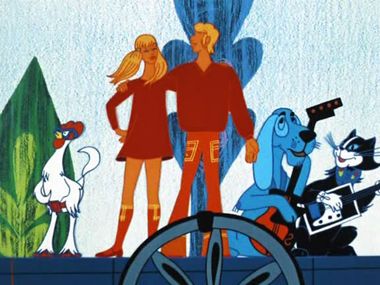
Would you like to learn some? Here are 5 very famous and beloved songs!
1. 'Ничего на свете лучше нету..." \\ 'There is nothing better in the world...' (from the cartoon: 'Musicians of Bremen')
text
2. "Спят усталые игрушки..." \\ 'Tired toys are sleeping ...' (from the children's program 'Good night, kids)
this is a song for a good night for few generations of Russian people
text
3. "Кабы не было зимы ..." \\ 'If there were no winter ... ' (from the cartoon 'Winter in Prostokvashino')
the cartoon, the song and the voice - all create unique, cozy and warm Russian winter
text
4. "Луч солнца золотого... " \\ 'The ray of the golden sun ... ' (from the cartoon 'Musicians of Bremen')
this ballad has become a song of love
text
5. "Пусть бегут неуклюже ... " \\ 'Let them run ...' (from the cartoon 'Cheburashka and Gena the Crocodile')
it is our birthday song!
text

Would you like to learn some? Here are 5 very famous and beloved songs!
1. 'Ничего на свете лучше нету..." \\ 'There is nothing better in the world...' (from the cartoon: 'Musicians of Bremen')
text
2. "Спят усталые игрушки..." \\ 'Tired toys are sleeping ...' (from the children's program 'Good night, kids)
this is a song for a good night for few generations of Russian people
text
3. "Кабы не было зимы ..." \\ 'If there were no winter ... ' (from the cartoon 'Winter in Prostokvashino')
the cartoon, the song and the voice - all create unique, cozy and warm Russian winter
text
4. "Луч солнца золотого... " \\ 'The ray of the golden sun ... ' (from the cartoon 'Musicians of Bremen')
this ballad has become a song of love
text
5. "Пусть бегут неуклюже ... " \\ 'Let them run ...' (from the cartoon 'Cheburashka and Gena the Crocodile')
it is our birthday song!
text
Wednesday, 2 November 2011


Wednesday, 22 June 2011
Russian with a bite
Found in the magazine SNOB.- Сноб.
Макс Такер / 08.06.11 13:37
Остренькое по-русски - Russian With a Bite
There’s a part of Russian culture that I haven’t yet been able to absorb and mimic. The way in which Russians communicate with each other still surprises me to this day. I’m still unable to predict and prepare adequate responses to phrases Russians throw around relentlessly.
For example, I was in a store that sold sandwiches and baked goods. The woman in front of me asked the salesperson, roughly translating into English, “Your sandwiches with meat…are they gone?” Now in my American mind, there are two possible answers. Yes and no. But the salesperson came up with a third, unexpected answer. “Who told you that?” I was completely flustered.
Not too long ago, I was in a cramped supermarket with my wife. We needed to get by a woman who was blocked the aisle. My wife asked her to move in the most polite way possible, roughly translating as “Can you please be so kind as to let us pass.” Again, in my American mind there are two responses. One is to move and the other is to not move. But this woman actually had a third response. “I’m not in your way.” If I were alone, I would have stood there for several minutes trying to figure out what to do next. But my wife, a pushy Russian when she needs to be, moved ahead with our cart and politely ran over the woman’s feet.
I was in a pharmacy. The person in front of me put his money down in the cash tray after ordering something (another interesting note: in the U.S. it’s rude to put the money on the counter. You hand it directly to the cashier. In Russia it’s rude to hand the money directly to the cashier. You put it down in the cash tray. Strange, but not blog worthy). He got his change and – as it sometimes happens – started to walk away, forgetting the little bag of medicine. The pharmacist had to stop the guy from walking away without the purchase. In America, you’d probably here some variation of the following phrase: “Sir! You forgot your medicine.” But, in this case, I heard a magical phrase: “Hey! Who’s going to take the treatment? Me?!”
Not too long ago, I overheard a conversation between two people: a chef and the chef’s assistant.
“Masha, is the cheese far?”
Masha: “No.”
Chef: “Then why isn’t it here?”
Masha: “I didn’t know you needed it”
Chef: “I need it.”
Masha: “Should I bring it?”
Chef: “Yes”
Why she didn’t simply say, “Masha, please bring me the cheese” is beyond me.
And this got me thinking. Why create such difficult, indirect, snarky responses? There has to be a cultural reason behind this.
Perhaps it’s rooted in the language. Russian language is complex and allows for many interpretations that often hide messages. Try reading Bulgakov, Dostoevsky, Tolstoi, and Pushkin, and you’ll see what I mean. There is even a Russian proverb – brevity is the sister of talent – meaning that it takes skill and talent to be succinct in Russia. Since brevity is also not a trait found in the Russian language perhaps brief conversations are just as rare. But I want to dig deeper.
What is really going on here is language is being used as a stealth weapon. While the person says one thing many hidden messages are being sent as well. The receiver might not physically hear the stealth messages, but he surely picks up the nonverbal bombs.
So, what’s the point to of throwing non-verbal bombs, then? There is a prevalent notion in Russian society that in order for me to prove that I’m better I must make you worse. The proverb “what is bad for my neighbor is good for me” comes to mind. And this is exactly what people do when they create conversations like this. They aren’t interested in answering the question or finding a solution. They’re one big walking sign screaming “[I think] I’m better than you.”
And now I’m back to a familiar theme. This is another way how Russians try to assert superiority to prove they are above you, better than you. After all, if you’re better than the rest, it’s simply another path to privileges.
Subscribe to:
Posts (Atom)